Meditations in an Emergency
For 3daysofdesign 2026, we presented Meditations in an Emergency—an exhibition exploring the tension between external noise and inner stillness. In a time defined by acceleration, distraction, and visual overload, the exhibition asks what it means to create space for attention. The exhibition can be experienced during our monthly Open House, held on the first Tuesday of every month.

Ascending the staircase, visitors enter the Gallery, constructed as a room within a room and designed to soften the intensity of the surroundings. At its centre, the new Smultron Series by Sjöberg Fjällström is presented on a raised podium, inviting closer attention to form and materiality.
In the Middle Lounge, the Shore Modular Sofa by Joel Fjällström creates an immersive setting centred on listening, connection, and shared presence. Tactile materials and lowered seating encourage a slower rhythm of attention, where conversations soften, and distractions gradually recede. Framed by deeper tones and a composed soundscape presented through Artcoustic loudspeakers, the room unfolds as a space for pause, immersion, and exchange.
Through a sequence of carefully composed interiors, each room marks a distinct shift in atmosphere, rhythm, and focus. Alternating between monumentality and intimacy, the exhibition unfolds as a progression shaped as much by perception as by the objects on display. Throughout, furniture, lighting, and materials are brought together to encourage attentive observation.
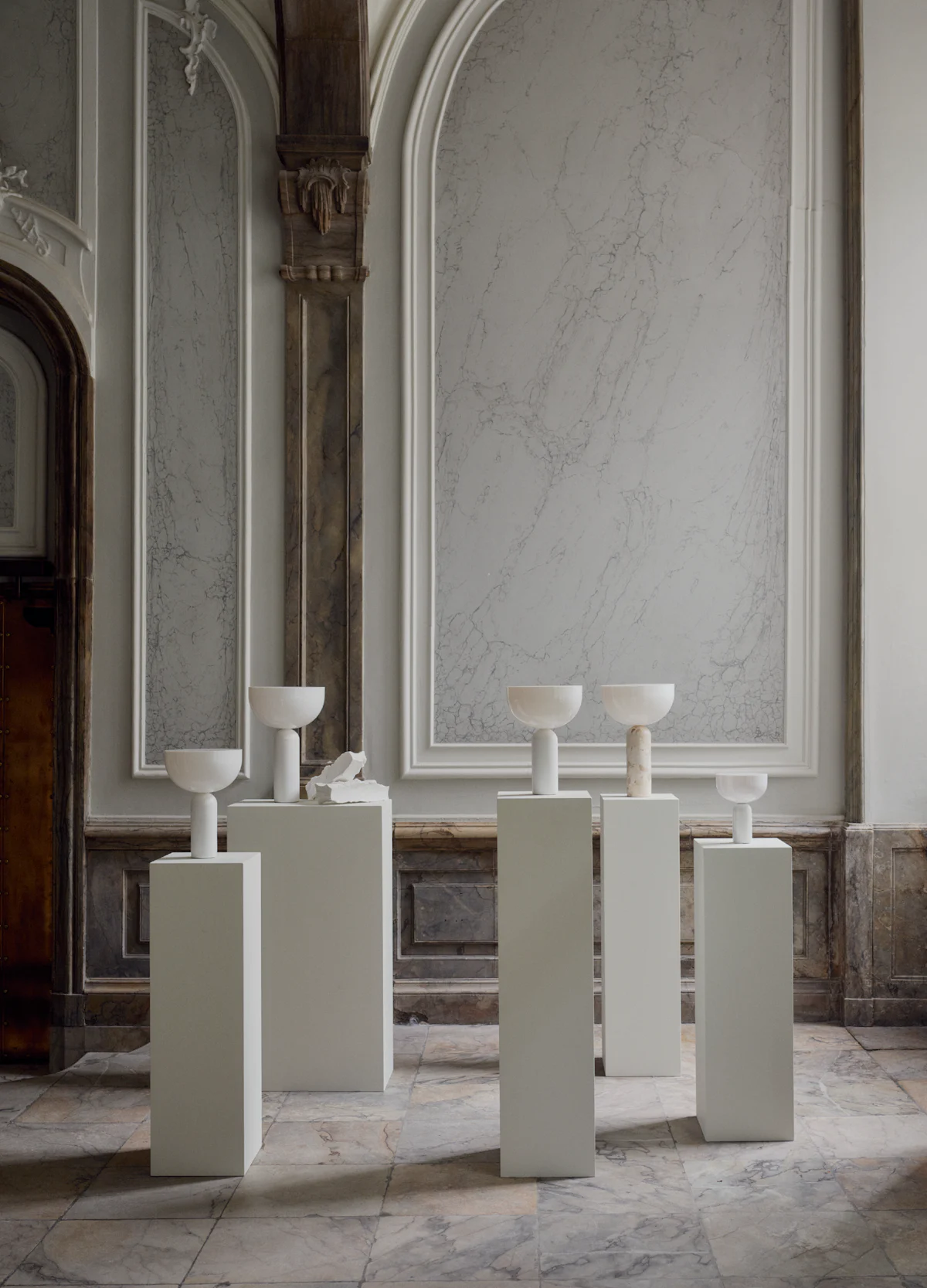
Marked by the monumental character of the Marble Staircase, the exhibition opens with a dialogue between finished objects and the process itself. The Kizu Series by Lars Tornøe is presented alongside marble remnants from our own production. Displayed on pedestals historically associated with preservation and value, the discarded fragments are given the same visual weight as the finished objects. Side by side, completed pieces and leftover forms begin to dissolve into one another, shifting between sculpture, product, and artefact.
Ascending the staircase, visitors enter the Gallery, constructed as a room within a room and designed to soften the intensity of the surroundings. At its centre, the new Smultron Series by Sjöberg Fjällström is presented on a raised podium, inviting closer attention to form and materiality.
In the Middle Lounge, the Shore Modular Sofa by Joel Fjällström creates an immersive setting centred on listening, connection, and shared presence. Tactile materials and lowered seating encourage a slower rhythm of attention, where conversations soften, and distractions gradually recede. Framed by deeper tones and a composed soundscape presented through Artcoustic loudspeakers, the room unfolds as a space for pause, immersion, and exchange.
Through a sequence of carefully composed interiors, each room marks a distinct shift in atmosphere, rhythm, and focus. Alternating between monumentality and intimacy, the exhibition unfolds as a progression shaped as much by perception as by the objects on display. Throughout, furniture, lighting, and materials are brought together to encourage attentive observation.
Marked by the monumental character of the Marble Staircase, the exhibition opens with a dialogue between finished objects and the process itself. The Kizu Series by Lars Tornøe is presented alongside marble remnants from our own production. Displayed on pedestals historically associated with preservation and value, the discarded fragments are given the same visual weight as the finished objects. Side by side, completed pieces and leftover forms begin to dissolve into one another, shifting between sculpture, product, and artefact.

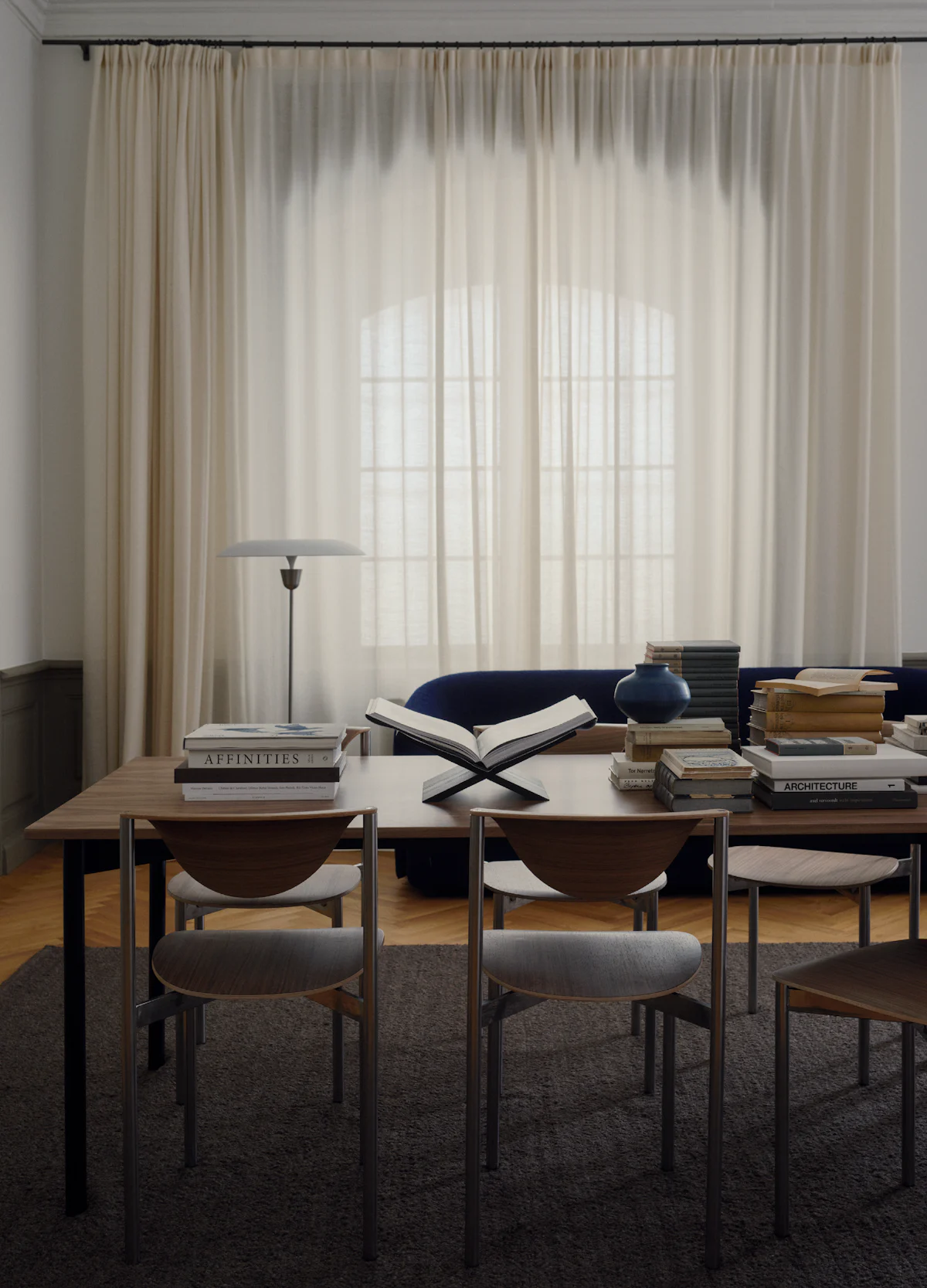
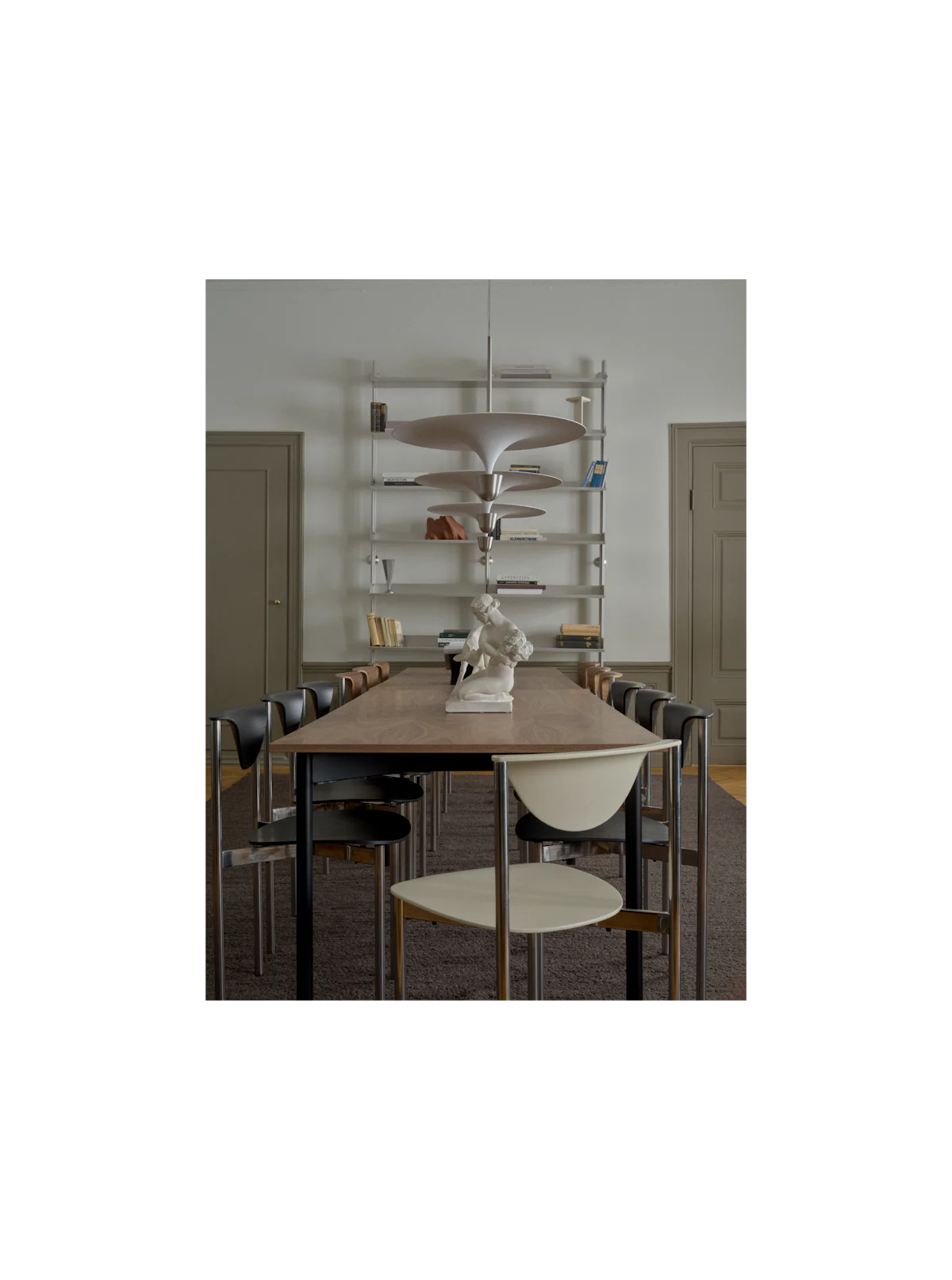

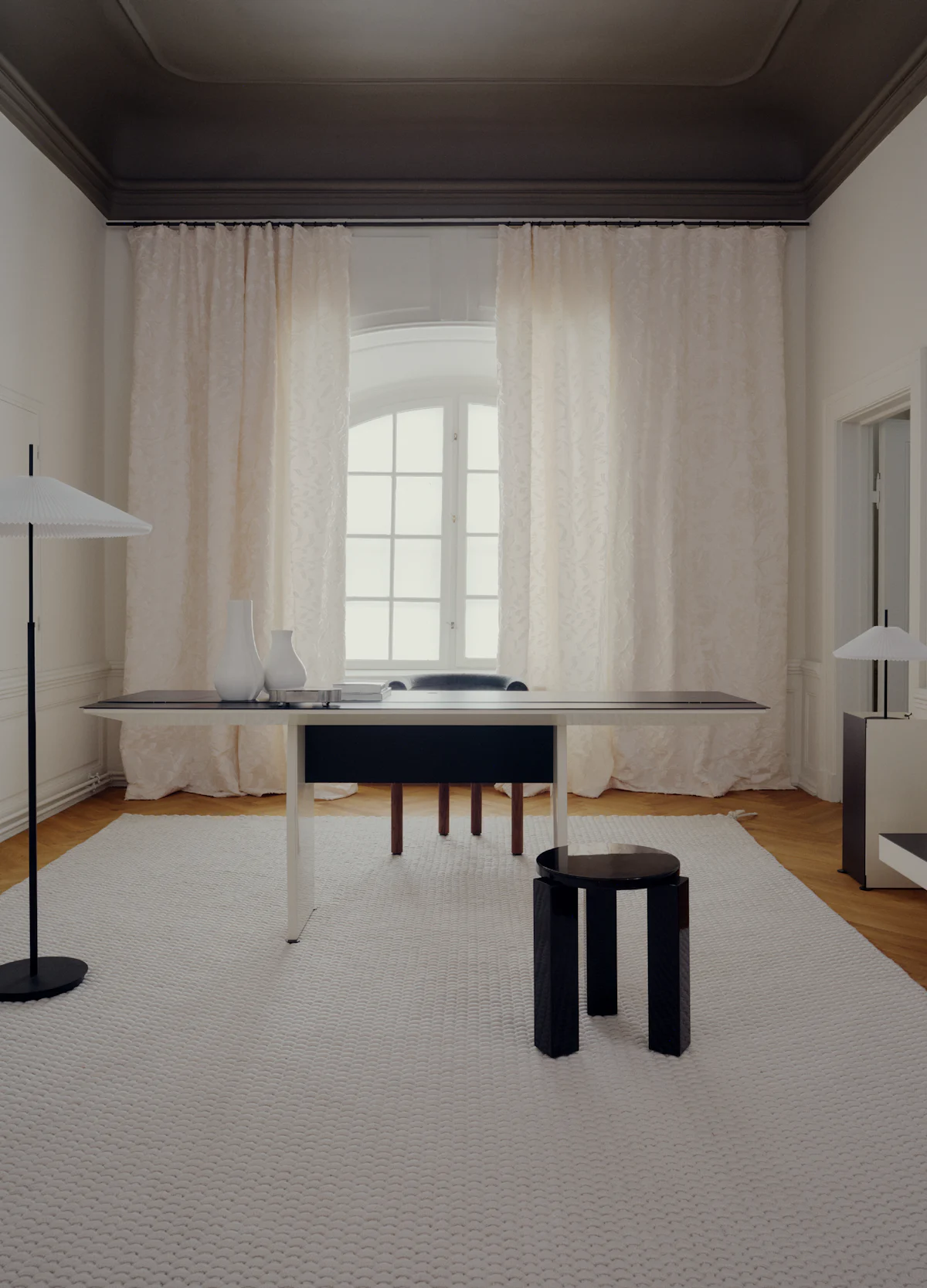
This introspection culminates in the Study. At its centre, a single New Works x Eskoleia Unit 001 Console, designed by Jonas Ravlo Stokke, stands isolated within a restrained interior and lighter palette. Muted tones and subtle contrasts create an environment of clarity and focus. More solitary in character, the room narrows the field of attention, allowing distractions to fall away.
From there, the exhibition turns towards curiosity and slower observation. In the Library, literature, objects, and artefacts come together in a setting shaped by discovery, where softer seating compositions create intimate areas for reading and conversation. Filled with books, artworks, and collected curiosities, the New Works Shelving System by Knut Bendik Humlevik allows small, personal discoveries to emerge over time.
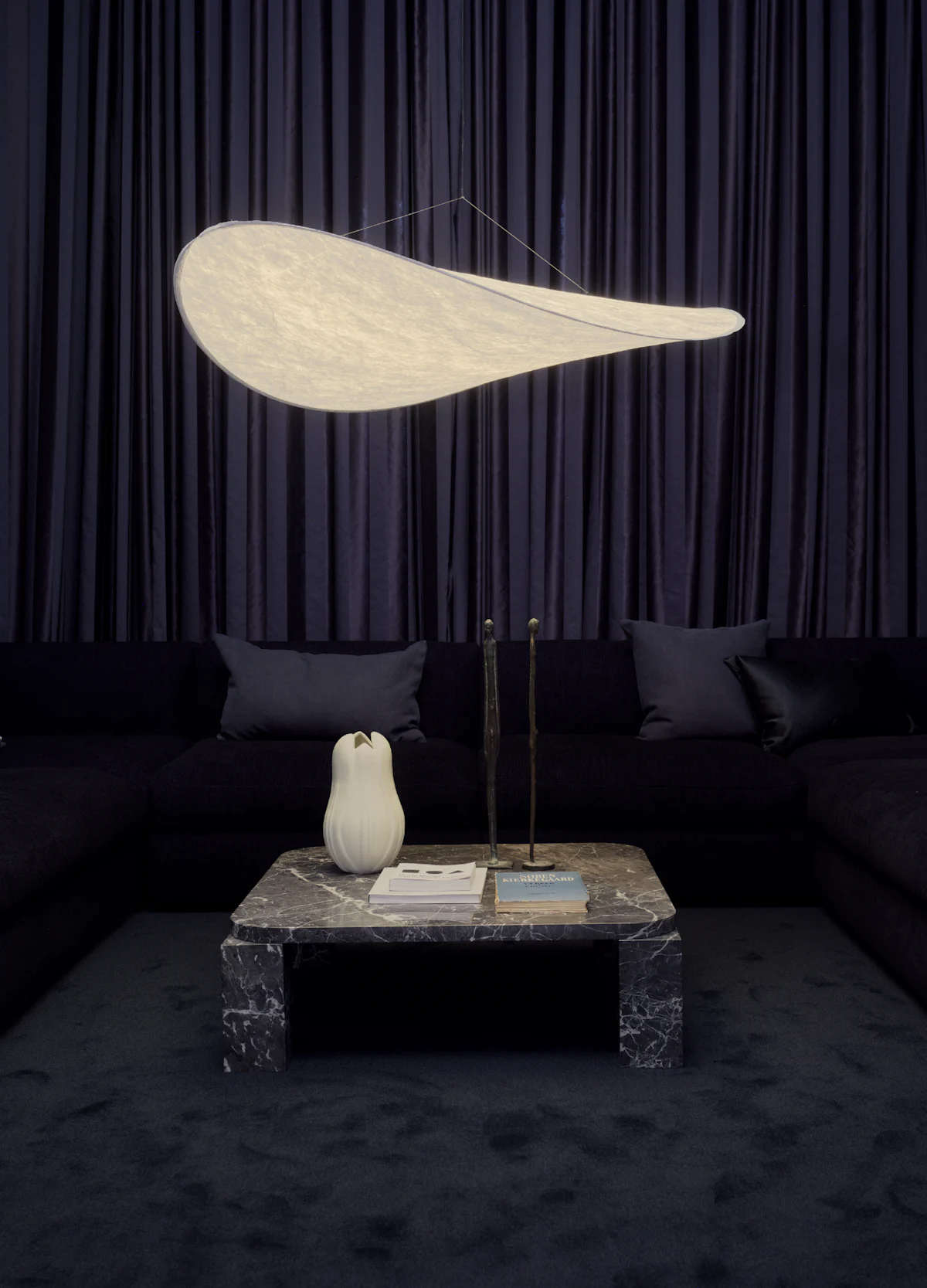
Adjacent, the Silent Room introduces a stronger sense of contrast. Darker materials and concentrated lighting create an introspective atmosphere, while the Coda Modular Sofa by John Astbury rests beneath the subdued glow of the Tense Pendant Lamp by Panter & Tourron. Stripped back in palette and expression, the room is shaped by shadow, restraint, and a quiet sense of tension.
This introspection culminates in the Study. At its centre, a single New Works x Eskoleia Unit 001 Console, designed by Jonas Ravlo Stokke, stands isolated within a restrained interior and lighter palette. Muted tones and subtle contrasts create an environment of clarity and focus. More solitary in character, the room narrows the field of attention, allowing distractions to fall away.
From there, the exhibition turns towards curiosity and slower observation. In the Library, literature, objects, and artefacts come together in a setting shaped by discovery, where softer seating compositions create intimate areas for reading and conversation. Filled with books, artworks, and collected curiosities, the New Works Shelving System by Knut Bendik Humlevik allows small, personal discoveries to emerge over time.
Adjacent, the Silent Room introduces a stronger sense of contrast. Darker materials and concentrated lighting create an introspective atmosphere, while the Coda Modular Sofa by John Astbury rests beneath the subdued glow of the Tense Pendant Lamp by Panter & Tourron. Stripped back in palette and expression, the room is shaped by shadow, restraint, and a quiet sense of tension.

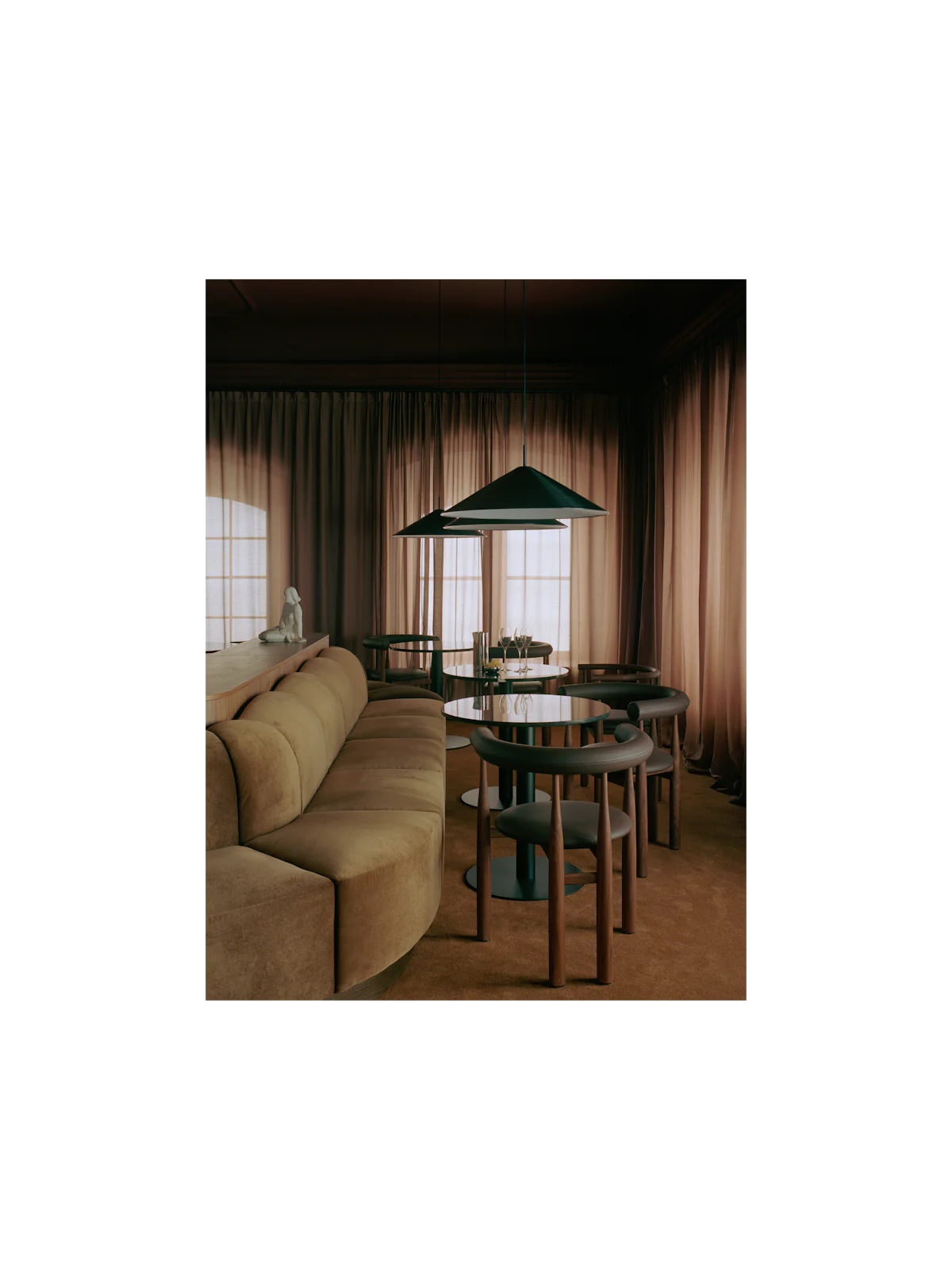
The journey concludes in the Champagne Bar, the final room in the exhibition. Here, guests can enjoy a glass of Champagne Taittinger in a setting of reflective surfaces, marble, and deep-toned textiles. The rounded composition of the Shore Dining Curved Modular Sofa by Joel Fjällström anchors the space, creating an atmosphere defined by shadow and softened light. Immersive and slightly disorienting, the room offers a moment of release—a space for surrender where the creative process gives way to the simple act of inhabiting the moment.
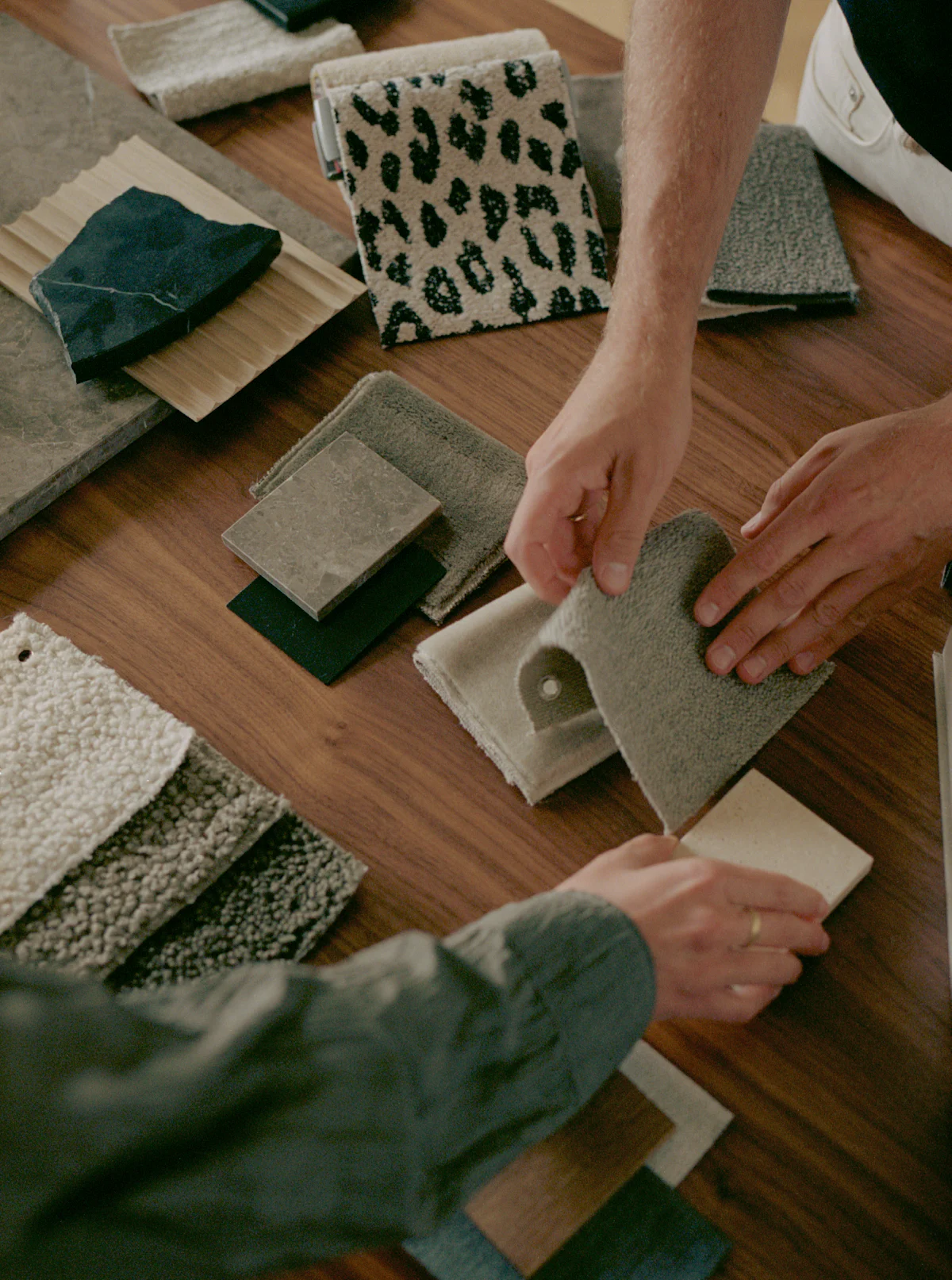
The exhibition opens up once again in the Atelier. Referencing the designer's workspace, the room brings together materials, objects, and prototypes within an open, collaborative setting. Developed in dialogue with textile brand Astrid, it incorporates textiles, samples, and material studies, making the design process visible as ideas evolve. A composition of four Atlas Tables by John Astbury and Dune Chairs by Panter & Tourron forms a shared workspace for conversation, experimentation, and material exploration.
The journey concludes in the Champagne Bar, the final room in the exhibition. Here, guests can enjoy a glass of Champagne Taittinger in a setting of reflective surfaces, marble, and deep-toned textiles. The rounded composition of the Shore Dining Curved Modular Sofa by Joel Fjällström anchors the space, creating an atmosphere defined by shadow and softened light. Immersive and slightly disorienting, the room offers a moment of release—a space for surrender where the creative process gives way to the simple act of inhabiting the moment.
The exhibition opens up once again in the Atelier. Referencing the designer's workspace, the room brings together materials, objects, and prototypes within an open, collaborative setting. Developed in dialogue with textile brand Astrid, it incorporates textiles, samples, and material studies, making the design process visible as ideas evolve. A composition of four Atlas Tables by John Astbury and Dune Chairs by Panter & Tourron forms a shared workspace for conversation, experimentation, and material exploration.
Next Read
Colour, Material & Finish - A Sensory Dialogue
Colour, material, and finish are the transformative forces that shape our surroundings. They decide how light moves across a surface, how the hand meets an object, how one piece speaks to another. These can be subtle choices, yet together they form the atmosphere of a room.